
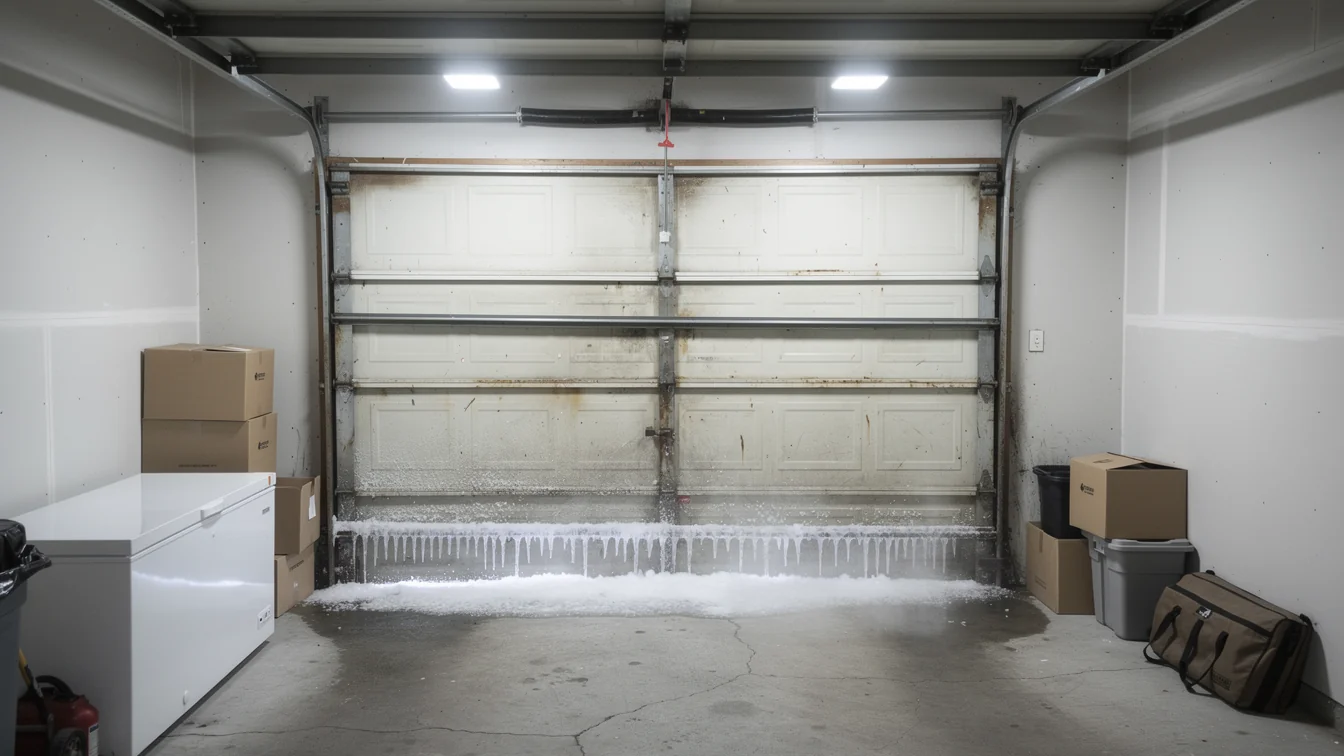
Why So Many Hanover Garages Still Have Uninsulated Doors
Most Hanover garage doors date to the 1938-1994 building boom, before insulation codes existed.
Read moreBlogHanover, PA · 4 min read
Most Hanover homes date back to the 1960s and 70s, built with doors never meant for today's cold stretches. Here's what to weigh before replacing yours.
Local detail
Walk through most neighborhoods here and you're looking at houses built between 1938 and 1994, with the bulk going up in the 1960s and 70s. That's true across the 37 named areas that make up this part of the county, not just one or two streets. A door that age, if it's still original, was built to a spec nobody uses anymore: thinner steel, no thermal break, hardware sized for a lighter panel than what's sold today.
With 24,566 owner-occupied houses across the service area and a median household income of $79,094, most of what we see is a working door on a working house, not a crisis. People call when the door starts making noise, or when a panel finally gives out after fifty-plus years of cold and heat cycling. The decision at that point isn't really "repair vs. replace" in the abstract - it's whether the opener, track, and framing from 1968 are worth building around, or whether the whole system needs to come out together.
The area
This area sits in a cold-severe climate band, and that matters more for garage doors than most people expect. A detached garage with an original 1960s-era door isn't just old, it's usually uninsulated, which means the door itself is doing almost nothing to keep the coldest air out of a space that often shares a wall with the house.
Cold-severe conditions are also hard on springs and rollers specifically. Steel contracts in the cold, and a torsion spring that's been cycling for decades through real winters has already lost tension you can't get back by lubricating it. On a house from the 1972 median-build era, the spring under your door right now was very likely sized for a lighter, non-insulated panel - which is a problem the moment someone swaps in a heavier insulated replacement door without re-rating the spring to match. That's one of the most common mismatches we run into.
What we find
The mistake we see most is buying a door based on what's in stock or what looks good, without checking it against what's already on the house. A home built in the 1960s or 70s typically has an opening, track radius, and header clearance sized to an older standard. Drop in a modern door without checking those dimensions and you end up forcing hardware to fit, which shortens the life of everything attached to it.
The second mistake is upgrading the door but leaving the original spring and opener in place, assuming they'll just handle the new weight. They often won't, especially on a house from this era where the spring was likely never upgraded in the first place. If you're going to replace the door, the spring and opener hardware need to be part of that same conversation, not an afterthought six months later when something strips out.
How we work
Not every door on a 1960s or 70s house needs to come out. If the panels are intact, the door still seals reasonably well, and the only issue is a worn roller or a noisy track, that's a repair job, not a replacement job - and it's the cheaper, faster fix. We'd rather tell you that than sell you a door you don't need yet.
Where we'd push you toward replacement sooner: if the door is original to a house built before the 1960s wave and you're already dealing with rust-through on panels or a spring that's visibly stretched, cold-severe winters won't be kind to it much longer. Short of that, it's reasonable to wait and keep servicing what you've got. One honest limitation: we don't carry every obsolete panel profile from houses this old, so on some original 1960s doors, a matching replacement panel isn't something we can source - at that point the choice is a full door, not a patch.
Questions
Often yes, if the panels aren't rusted through and the frame is still square. Original doors from this era are usually lighter steel without insulation, so a repair keeps it working but won't fix the cold-air problem. If you're noticing drafts more than noise, that's a sign repair only buys time.
Insulated panels weigh more than the original lightweight steel doors common on houses built in the 1960s and 70s here. A spring sized for the old door won't lift the new one properly, which means premature wear on the opener and cables. The spring has to be matched to the actual door going in, not the one that came out.
No. Some panel profiles used on houses built decades ago aren't made anymore, and we can't always source an exact match. When that happens, the realistic options are a full door replacement rather than a single-panel patch.
Recommendation
More garage door guides for Hanover homeowners.
Most Hanover garage doors date to the 1938-1994 building boom, before insulation codes existed.
Read more
Hanover homes built mostly in the 1960s and 70s carry original hardware that talks before it fails.
Read more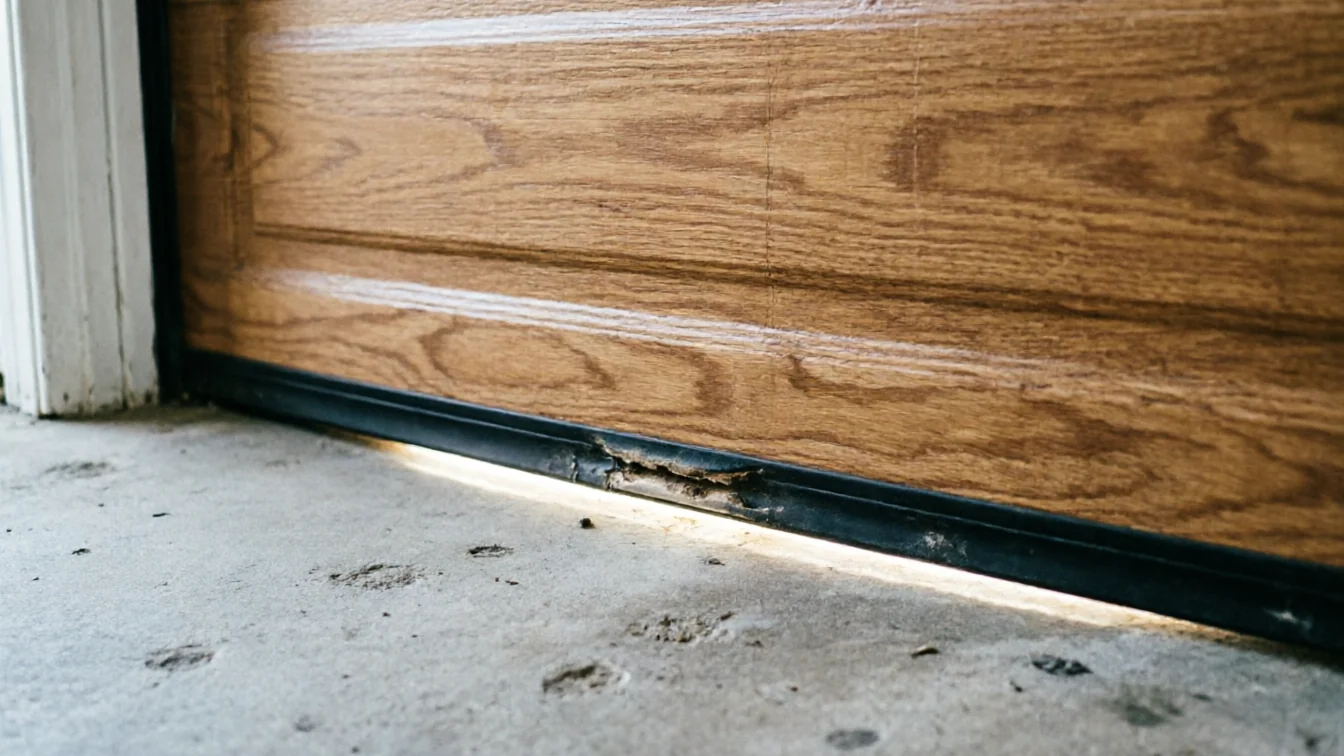
Hanover homes built mostly in the 1960s and 70s still run original seal tracks.
Read moreReady when you are
Hanover Garage Door Pros repairs and installs garage doors, springs and openers in Hanover, PA and the surrounding area.