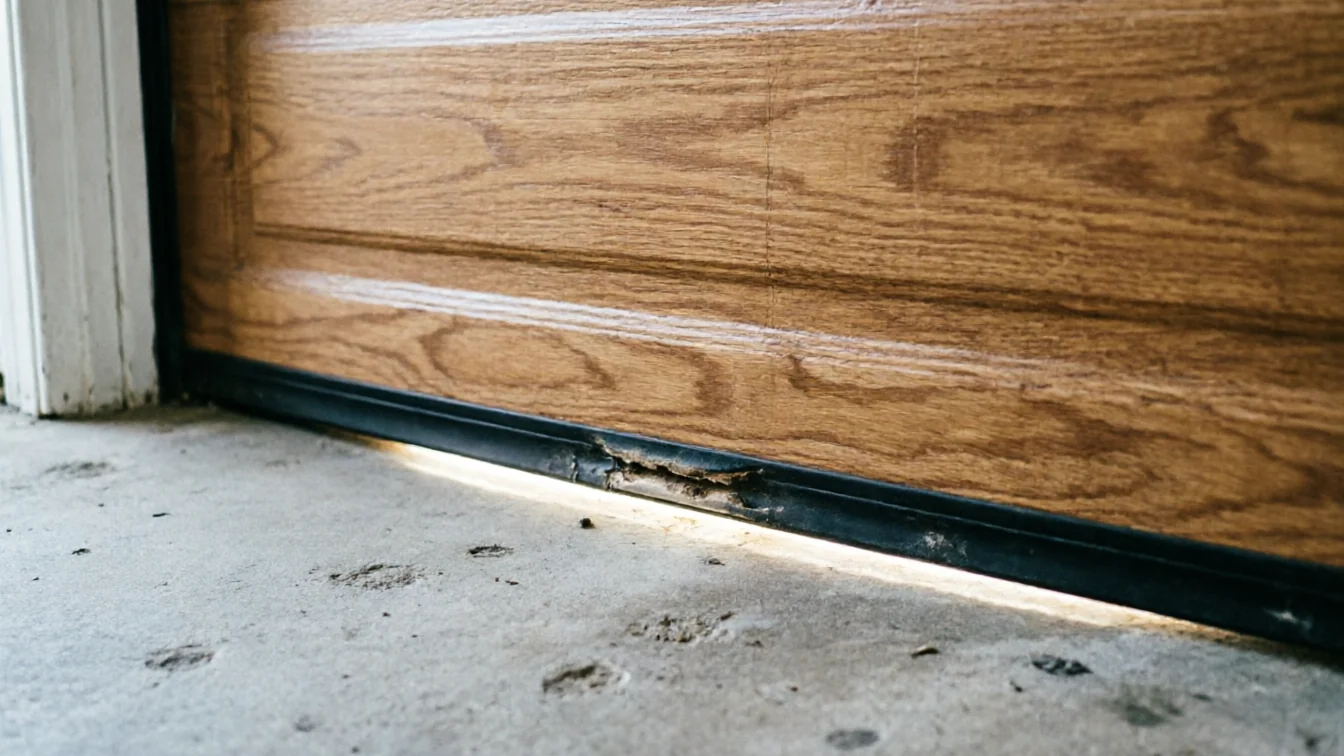
Why Hanover Garage Doors Draw Cold Air at the Bottom
Hanover homes built mostly in the 1960s and 70s still run original seal tracks.
Read moreBlogHanover, PA · 5 min read
Hanover homes built mostly between the 1960s and 1972 run older torsion springs that snap fast once cold weather hits. Here's what that means for your door.
Local detail
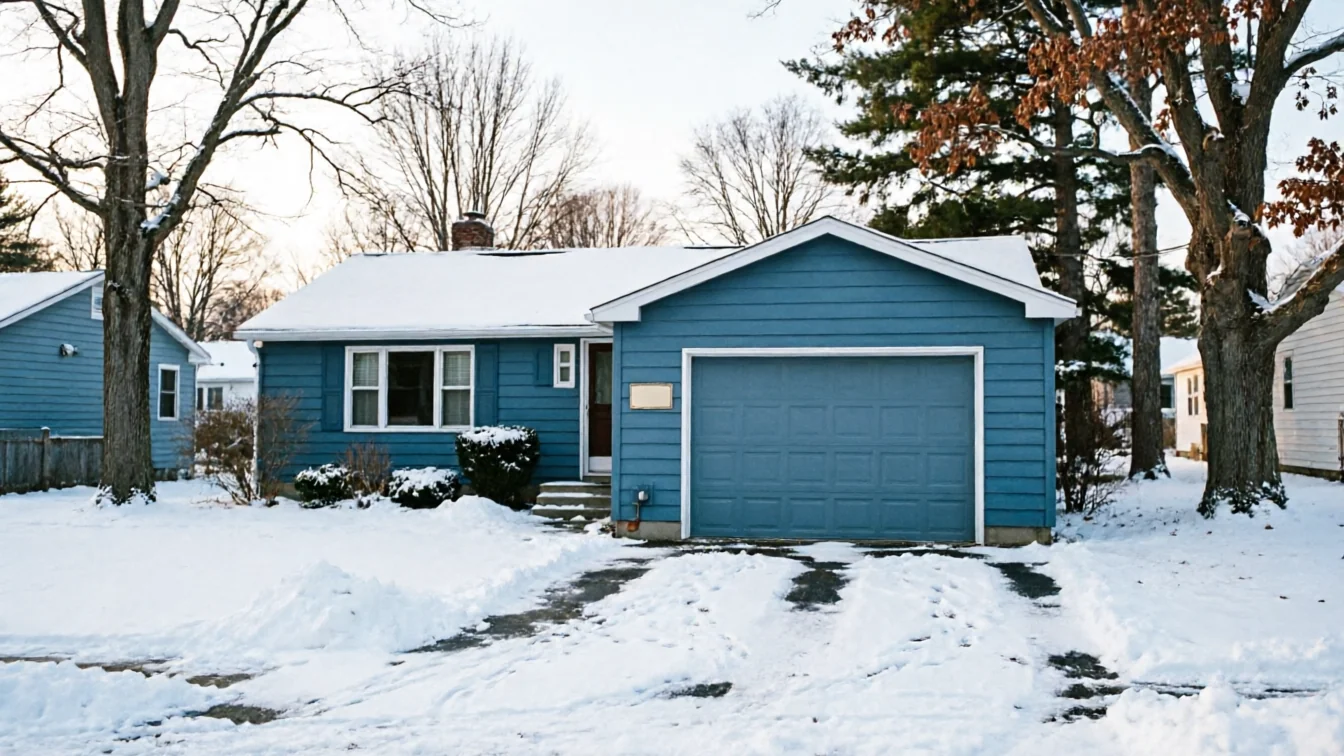
Most of the housing stock around here went up between 1938 and 1994, with the median sitting around 1972. That's not ancient, but it's old enough that a lot of the original torsion springs are still hanging on the wall above the door, doing a job they were never meant to do for this long. Across the area's 37 named sections, the bulk of what's out there is still 1960s and 70s construction - split-levels, ranch-style garages, the kind with a single torsion spring mounted dead center over the door rather than the dual-spring setups you see on newer builds.
A spring like that has a service life measured in cycles, not years, but age and weather both shorten that life. When a torsion spring that's been stretching and compressing for forty-plus winters finally lets go, it almost always picks the coldest morning of the year to do it. That's not bad luck. It's metal fatigue meeting a temperature drop, and in a town built mostly before 1972, there's a lot of that metal still in service.
The practical upshot: if your door is original to the house, or close to it, you're not asking if the spring will fail in cold weather, you're asking when.
The area
This area sits in a COLD-severe climate band. That matters more for a garage door spring than most people expect. Steel contracts as it cools, and a coil that's already fatigued from decades of cycling gets measurably more brittle once the temperature drops hard overnight. The snap usually happens on the first really cold morning after a mild stretch, not during a long cold snap, because that's when the metal gets shocked the hardest.
With 24,566 owner-occupied houses out of roughly 47,575 households across the service area, a sizable share of the doors we're called out to have springs that match the home's age, not the current year. Original hardware plus a cold snap is a predictable combination, and it's the single most common reason for an early-morning no-start call in the winter months here.
Median household income in the area runs $79,094, which is worth mentioning only because it means most people here can afford to do the repair right the first time - full spring replacement with correctly sized hardware - rather than deferring it or patching around a weak spring with a temporary fix that fails again the next cold spell.
What we find
The most common mistake is trying to force a door that's binding in the cold. A spring under extra tension from the cold doesn't announce itself before it fails - it holds, holds, holds, then lets go all at once, usually while someone's leaning on the door or standing under it. If a door feels heavier than normal or the opener strains on a cold morning, that's the spring telling you it's close, not a reason to push harder on the remote.
The second mistake is assuming a newer-looking door means newer springs. In a lot of the 1960s and 70s houses around here, the door panels got replaced at some point but the original torsion hardware stayed put, because nobody thinks about the spring until it breaks. A repainted or re-paneled door can be sitting on forty-year-old steel.
Here's the honest limitation: we don't carry every spring size on the truck, and some older torsion setups use hardware that's no longer a stock item. If your door is original to a 1950s or 60s build, there's a real chance the first visit is diagnosis and ordering, not same-day repair. We'd rather tell you that up front than promise a fix we can't deliver that day.
How we work
Not every symptom means an emergency call tonight. If the door is just a little noisier than usual, or it takes an extra second to open on a cold morning, that's wear talking, not failure. A spring that's going to let go usually gives some warning first - a visible gap in the coil, a door that looks crooked when it's halfway up, or an opener that strains and reverses. None of that is dangerous on its own, and it can wait for a scheduled visit instead of an after-hours one.
Where waiting stops being fine is once the spring has actually snapped. At that point the door is heavy enough that the opener can get damaged trying to lift it, and a cable under that kind of sudden slack is a real hazard if someone tries to force the door by hand. That's the line - cosmetic wear and odd noises can sit on the calendar, a broken spring on a cold morning shouldn't.
Given the age of a lot of the housing stock in this area, median built around 1972, it's worth having a spring looked at before winter rather than after it fails, especially if you've never had it replaced.
Questions
Steel gets more brittle as it cools, and a spring that's already fatigued from years of cycling is the one most likely to snap when the temperature drops hard. In a COLD-severe climate like this one, that first truly cold morning after a mild stretch is when most failures happen, not during a long stretch of steady cold.
It's a reasonable assumption. A lot of the housing stock here dates to the 1960s and 70s, median build year around 1972, and torsion springs often outlast the rest of the door hardware without anyone noticing until they fail. If you've never had the spring replaced, treat it as original.
Usually, but not always. Some older torsion setups on original 1950s-60s doors use hardware sizes we don't carry on the truck. If that's the case, the first visit may be diagnosis and ordering rather than a same-day fix, and we'll tell you that up front rather than guess.
Recommendation
More garage door guides for Hanover homeowners.
Hanover homes built mostly in the 1960s and 70s still run original seal tracks.
Read more
Hanover homes built mostly in the 1960s and 70s carry original hardware that talks before it fails.
Read more
Hanover's housing stock dates mostly to 1938-1994, and cold-season outages catch older openers without battery backup.
Read moreReady when you are
Hanover Garage Door Pros repairs and installs garage doors, springs and openers in Hanover, PA and the surrounding area.